

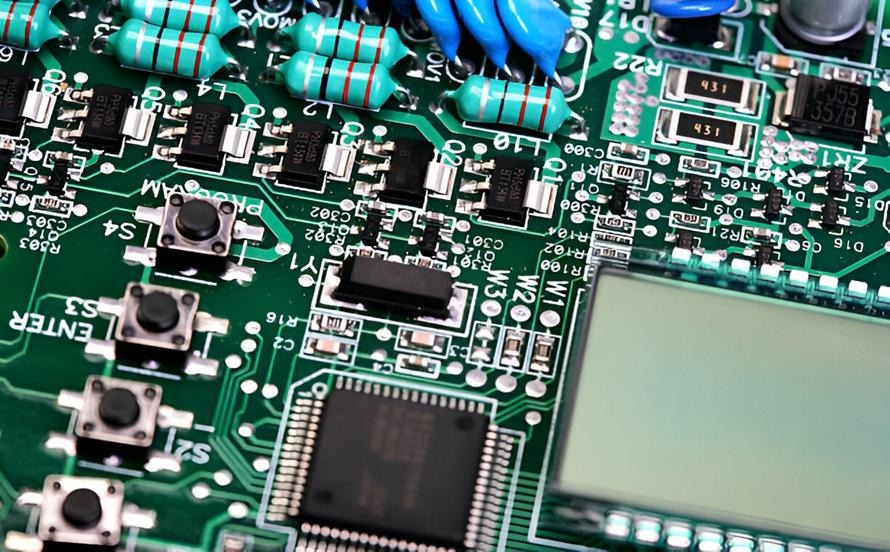
Every electronic device depends on hundreds or even thousands of components working together to perform specific functions. While integrated circuits, processors, and sensors often receive the most attention, one of the most fundamental components found on every printed circuit board is the resistor. Circuit Board Resistors regulate electrical current, control voltage levels, protect sensitive components, and ensure stable circuit operation. Without properly selected resistors, even the most advanced electronic systems would fail to function reliably.
As electronic products become more compact and technologically advanced, resistor selection has become increasingly important. Modern circuit boards require components that provide exceptional accuracy, long-term stability, and reliable performance under a wide range of operating conditions. Engineers must carefully consider resistance values, power ratings, temperature coefficients, tolerance levels, and package sizes when designing a PCB.
Leading Top PCB Suppliers understand that component quality directly affects the reliability of the finished product. Along with precision PCB fabrication and assembly, they ensure that high-quality resistors and other electronic components are integrated into every board according to strict manufacturing and quality standards.
This article explains what circuit board resistors are, how they work, the different factors involved in resistor selection, their applications, and why partnering with experienced PCB suppliers is essential for reliable electronics manufacturing.
What Are Circuit Board Resistors?
Circuit Board Resistors are passive electronic components designed to limit or regulate the flow of electrical current within a circuit. By providing controlled electrical resistance, they help maintain appropriate voltage and current levels throughout the PCB.
Resistors are mounted directly onto printed circuit boards using either through-hole or surface mount technology. Surface mount resistors are commonly used in modern electronics because of their compact size, allowing manufacturers to create smaller and more densely populated circuit boards.
Each resistor is manufactured with a specific resistance value measured in ohms. Depending on the application, engineers select resistors that provide the precise electrical characteristics required for voltage division, current limiting, signal conditioning, pull-up and pull-down functions, impedance matching, and circuit protection.
Although physically small, resistors perform critical functions that directly influence the performance, efficiency, and reliability of electronic systems.
Why Circuit Board Resistors Are Important
The proper selection of Circuit Board Resistors is essential because they help maintain stable electrical operation throughout the circuit. Without adequate resistance control, excessive current could damage integrated circuits, transistors, LEDs, sensors, or other sensitive electronic components.
Resistors also establish reference voltages for analog and digital circuits, ensuring that processors, communication modules, and control systems receive stable input signals. In timing circuits, resistors work together with capacitors to control charging and discharging rates that determine operating frequencies and signal timing.
In power electronics, resistors assist with current sensing, voltage regulation, load balancing, and power dissipation. They also contribute to signal integrity by minimizing electrical noise and improving circuit stability in high-speed applications.
Their ability to perform these fundamental electrical functions makes resistors indispensable in virtually every PCB design.
Selecting the Right Circuit Board Resistors
Choosing appropriate Circuit Board Resistors requires careful engineering analysis during PCB design. Resistance value is one of the first considerations because it determines how much current flows through a particular section of the circuit.
Power rating is equally important. Resistors that dissipate excessive power generate heat, which can reduce performance or shorten component lifespan if not properly managed.
Tolerance specifies the allowable variation from the nominal resistance value. Precision analog circuits, medical devices, measurement equipment, and communication systems often require low-tolerance resistors to maintain consistent electrical accuracy.
Temperature coefficient also influences resistor selection. Components operating in environments with changing temperatures must maintain stable resistance values to ensure reliable circuit performance.
Engineers also evaluate package size, mounting technology, reliability requirements, and environmental conditions before selecting the most appropriate resistor for each application.
The Role of Circuit Board Resistors in PCB Performance
The performance of modern electronic systems depends heavily on properly selected Circuit Board Resistors. Stable resistance values contribute to accurate signal processing, predictable circuit behavior, and long-term operational reliability.
In digital electronics, resistors help establish logic levels while protecting communication interfaces from excessive current. In analog circuits, they ensure accurate signal amplification, filtering, and voltage regulation.
Power management circuits rely on resistors for current measurement, feedback control, and protection functions that improve system efficiency. High-frequency communication systems utilize precision resistors to support impedance matching and minimize signal reflections.
As PCB designs become increasingly compact, miniature surface mount resistors enable engineers to maintain circuit functionality while reducing board dimensions and supporting higher component densities.
The reliability of these components directly affects the overall performance of the finished electronic product.
Applications of Circuit Board Resistors
Circuit Board Resistors are used throughout every sector of the electronics industry. Consumer electronics manufacturers integrate resistors into smartphones, laptops, televisions, gaming consoles, wearable devices, smart home products, and networking equipment where stable electrical performance is essential.
Automotive electronics rely on precision resistors in engine control units, battery management systems, infotainment platforms, advanced driver assistance systems, lighting controllers, and electric vehicle power electronics designed for demanding operating environments.
Medical device manufacturers use high-precision resistors in patient monitoring systems, diagnostic equipment, laboratory analyzers, imaging devices, portable healthcare instruments, and implantable electronics requiring exceptional accuracy and long-term reliability.
Industrial automation systems incorporate resistors into programmable logic controllers, robotics equipment, motor drives, sensors, industrial communication networks, and factory automation platforms operating continuously under challenging conditions.
Resistors are equally important in aerospace electronics, telecommunications infrastructure, renewable energy systems, defense equipment, scientific instruments, railway electronics, and Internet of Things devices where dependable electrical performance is critical.
Why Top PCB Suppliers Make a Difference
Working with experienced Top PCB Suppliers provides significant advantages throughout PCB development and manufacturing. Professional suppliers understand that high-quality circuit boards require not only accurate fabrication but also carefully selected electronic components that meet customer specifications.
Leading suppliers perform Design for Manufacturability reviews to verify that resistor placement, pad design, thermal management, and assembly processes support reliable production. Their engineering expertise helps identify potential design issues before manufacturing begins.
Modern manufacturing facilities utilize automated surface mount assembly equipment, solder paste inspection systems, automated optical inspection, X-ray analysis, and electrical testing to ensure every resistor is accurately placed and properly soldered.
Many suppliers also offer complete manufacturing solutions that include PCB fabrication, component sourcing, PCB assembly, functional testing, prototype production, and logistics management. This integrated approach simplifies product development while improving manufacturing consistency.
By working closely with customers throughout the production process, experienced PCB suppliers help ensure that every assembled circuit board delivers dependable long-term performance.
Quality Assurance in PCB Assembly
Quality assurance plays a critical role in ensuring that Circuit Board Resistors function correctly after assembly. Manufacturers begin by verifying incoming components for correct resistance values, package dimensions, manufacturing quality, and compliance with engineering specifications.
During assembly, automated pick-and-place equipment accurately positions each resistor before controlled reflow soldering permanently attaches the components to the PCB. Automated Optical Inspection verifies correct placement, orientation, solder joint quality, and component integrity.
Additional inspections such as X-ray analysis evaluate hidden solder joints beneath advanced packages, while electrical testing confirms continuity, resistance values, circuit functionality, and overall product performance.
Depending on the application, completed assemblies may also undergo thermal cycling, vibration testing, environmental stress screening, functional testing, and reliability evaluation to ensure stable long-term operation.
Leading manufacturers maintain internationally recognized certifications including ISO 9001, IPC standards, UL certification, IATF 16949 for automotive electronics, ISO 13485 for medical devices, AS9100 for aerospace manufacturing, and RoHS compliance. These quality systems help ensure that every assembled PCB meets demanding global reliability standards.
Conclusion
Circuit Board Resistors are among the most essential components in modern electronic systems, providing accurate current control, voltage regulation, signal conditioning, and circuit protection across countless applications. Their proper selection and integration directly influence the performance, efficiency, and reliability of every printed circuit board.
Experienced Top PCB Suppliers combine precision PCB fabrication, advanced assembly technologies, high-quality component sourcing, and rigorous quality assurance to deliver reliable electronic products for industries including consumer electronics, automotive, healthcare, industrial automation, telecommunications, aerospace, and renewable energy. By partnering with a trusted PCB supplier, businesses can ensure that every resistor, along with every other electronic component, contributes to a dependable, high-performance electronic system capable of meeting today’s increasingly demanding technological requirements.
